I was born in Korea and raised in China. I’m turning 30 this year, and I’ve spent about 10 years each in Korea, China, and the U.S to date. That gives me a unique perspective on three very different education systems.
When I was 8, my mom sent me to a local Chinese school in Shanghai. This was rare for expat kids back in the early 2000s. Most kids attended international schools or schools run by their home countries, like Shanghai Korean school. My mom believed Mandarin would be a powerful skill for the future, given that China is a fast-growing country with the most population in the world.
Here’s how my K-12 education looked:
K1–K2: Korean school
K3–K9: Chinese school
K10–K12: International school
Now that I work as an educator in the U.S., I notice striking differences between education systems. Here’s what stood out most during my 10 years in Chinese schools.
1. Classroom Discipline & Teacher Authority
One of the biggest shocks for me in the U.S. was classroom behavior. American kids often seem too “free-range” to me. I’ve seen students doing splits in my robotics class, and that’s considered nothing unusual. Some play music or video games on their iPads, punch another student while I’m helping others, or chat and giggle non-stop for 30 minutes. Any of these would have been unimaginable in China.
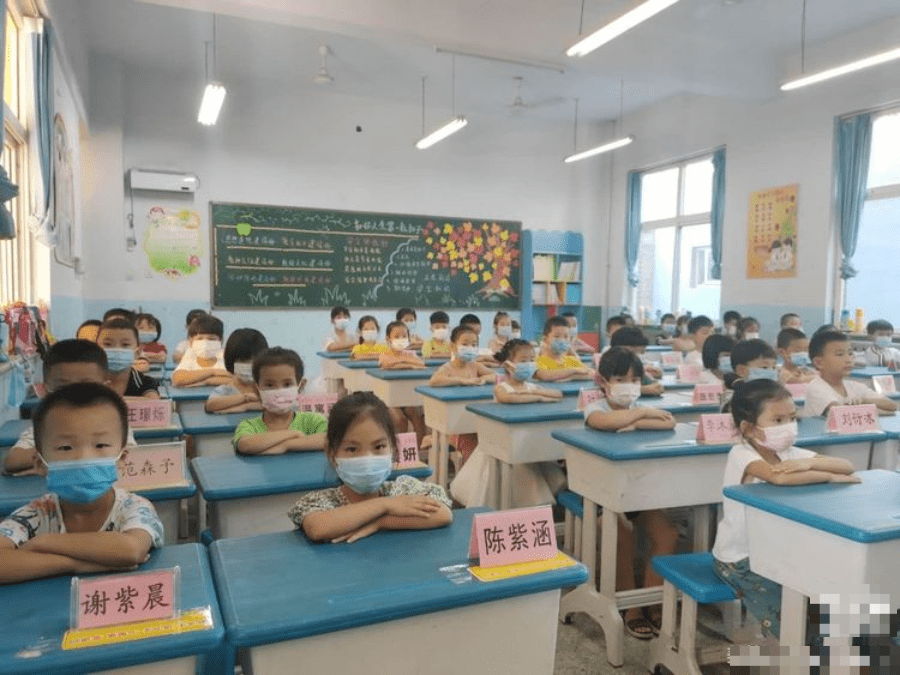
In Chinese schools, students sit properly, stand up together to greet the teacher, and follow strict discipline. Students have to wear uniforms every day, and schools enforce rules regarding hair, makeup, and jewelry. According to my parents who went to school in Korea, the classroom atmosphere in China felt similar to what Korean schools were like in the 80s.

Chinese teachers hold absolute authority to the point that students rarely challenge them even when they’re wrong. I got in trouble multiple times for calling out teachers’ mistakes or unfair behavior. Once, I brought my mom to school and spoke with the vice principal to fight for my spot in a selective Physics program because my teacher recommended her favorite student instead of choosing fairly. I fought and got the spot, but my Chinese friend did not get a spot because she didn’t want to get involved in conflict with the school authority.
Here’s the trade-off:
U.S. classrooms focus on engagement and fun, and encourage students to speak up and share their opinions. Sometimes this can challenge teachers, especially with younger students, because kids may behave however they want.
Chinese classrooms are more orderly, but they tend to suppress questioning, challenges, and debate.
2. Grading System & Academic Pressure
In the U.S. many elementary schools don’t assign traditional grades until around K–4. After K-4, the traditional A–F system or the 4-point GPA system has come into practice. By high school, GPA and class rank start to matter.
In China, students are graded on a 100-point scale from K–1, sometimes even using half points. This makes it crystal clear who is performing better and naturally establishes a ranking. Instead of having students clustered in a few broad brackets of A, B and C, you see a wide range of scores from 60 to 100.
Tests get extremely challenging in middle school in preparation for ZhongKao, a standardized test for 9th graders. The class averages are often between 70 and 80 and high scores are rare. Here is a comparison of a math question from PSAT 8/9 and ZhongKao exam in Shanghai.
The ZhongKao question is more complicated and demands a much higher level of understanding in geometry and stronger problem solving skills. These types of questions are intentionally designed to challenge and fail most students. The brutal difficulty of the exams amplifies differences in academic performance and highlights the top-tier students with natural talent, especially in math.
In the U.S., students often participate in extracurricular activities such as Math Kangaroo or AMC 8 to showcase their talent in math, because regular school math cannot differentiate students to the same extent. In China, your ZhongKao or GaoKao score often reflects your math talent.
To this day, I still remember scoring 23.5 on my first Chinese test in 3rd grade and gradually improving until I could match the class average and reach native-level proficiency in Mandarin. On one hand, this system helped me track my academic performance and understand where I stood in the class, which motivated me to work hard. On the other hand, I was under an extreme amount of academic stress since middle school, because I had to constantly compete with my peers for 1 point or even half a point.


The Chinese ZhongKao question is more complicated and demands a much higher level of understanding in geometry and stronger problem solving skills. These types of questions are intentionally designed to challenge and fail most students. The brutal difficulty of the exams amplifies differences in academic performance and highlights the top-tier students with natural talent, especially in math.
In the U.S., students often participate in extracurricular activities such as Math Kangaroo or AMC 8 to showcase their talent in math, because regular school math cannot differentiate students to the same extent. In China, your ZhongKao or GaoKao score often reflects your math talent.
To this day, I still remember scoring 23.5 on my first Chinese test in 3rd grade and gradually improving until I could match the class average and reach native-level proficiency in Mandarin. On one hand, this system helped me track my academic performance and understand where I stood in the class, which motivated me to work hard. On the other hand, I was under an extreme amount of academic stress since middle school, because I had to constantly compete with my peers for 1 point or even half a point.
3. Talent Pipeline
I haven’t found everyday life in China particularly special because of its communism. But the Soviet-style talent pipeline is definitely something that made me feel the system was communist.
I began competing in math competitions in 6th grade and I was for sure talented in math. Because of that I was given multiple opportunities through state-run math and physics programs. For example, the state offers a physics competition program for 7th graders, even though physics is normally taught in 8th grade in China. Each year, schools are given a quota to recommend students for an entrance exam which is basically math competition problems. A small number of students are selected, and the state then provides weekly physics sessions at an extremely low cost, just a few hundred yuan (about 30–60 U.S. dollars). This 7th grade curriculum covers mechanics, electricity, and fluids, and some of the mechanics problems are more difficult than those on the AP Physics 1 exam.
Building a good foundation is important. The way CollegeBoard designs the course in this order has a reason. And You have to learn Unit 1 (atomic structures) to realy learn Unit 2 (how atoms form bonds), and then you can learn Unit 3 (molecules interact with each other). You’ll also rely on the knowledge you learn Unit 1-3 to learn topics in Unit 5-9. So if you idle in the first semester, then you’ll definitely struggle in the second semester because of lack of foundation.
Such hierarchical selection ensures that young talents are always on the radar of the state and given a clear pathway to top high schools and top colleges. My IB math teacher was an alumna of Shanghai High School, the most prestigious high school in Shanghai. She earned a perfect score in math on GaoKao and was immediately admitted to a B.S.–Ph.D. program at Fudan University, even though she failed chemistry and Chinese.
In the U.S., there are many gifted schools and talent programs as well. But there are also abundant resources for non-gifted and underserved students. Not all the resources are given to top-notch students and it is not a rigid, one-way pipeline like in China. There are far more options, and schools or the state don’t “push” students as strongly into such programs. Also, students can distinguish themselves through passion and commitment rather than natural talent.
4. Balance between Academics and Extracurriculars
The U.S. schools are unbeatable in this area. It’s simply not comparable at all. In China, school acceptance depends almost entirely on test scores, and there isn’t much time left for extracurricular activities or even P.E..
There is very little variety in the P.E. curriculum in China. Most schools don’t have indoor gyms or swimming pools and track is almost the only option. My middle school offered volleyball and basketball, which was already considered exceptional. P.E. classes are often taken over by Chinese or math teachers. Many girls would just sit on the track field and slack off during P.E. And the P.E. teachers just allowed them to do so, quite the opposite of the strict discipline enforced in academic settings. This was my least favorite aspect of Chinese schools, and I always envied American kids who got to play sports in varsity teams.
Other extracurricular activities were almost nonexistent. My school had MUN club for high-schoolers, but it existed only because English was considered relevant to academics. Club activities were held once a week during regular school hours, but they weren’t taken seriously, and there were no afterschool options. There was no school orchestra, no cheerleading team, and no real culture of extracurricular involvement.
My Final Thought:
Looking back, my 10 years of schooling in China were extremely intense and competitive. They helped me develop strong discipline and resilience, but also came with high stress and little internal motivation for why I should pursue STEM. I feel very lucky to have experienced higher education in the U.S., where I met people from diverse backgrounds and with diverse interests, and learned the importance of encouragement in learning.
Experiencing both systems has shaped my approach as an educator, allowing me to balance rigor with encouragement and fun so that students can excel academically while pursuing their passions.