
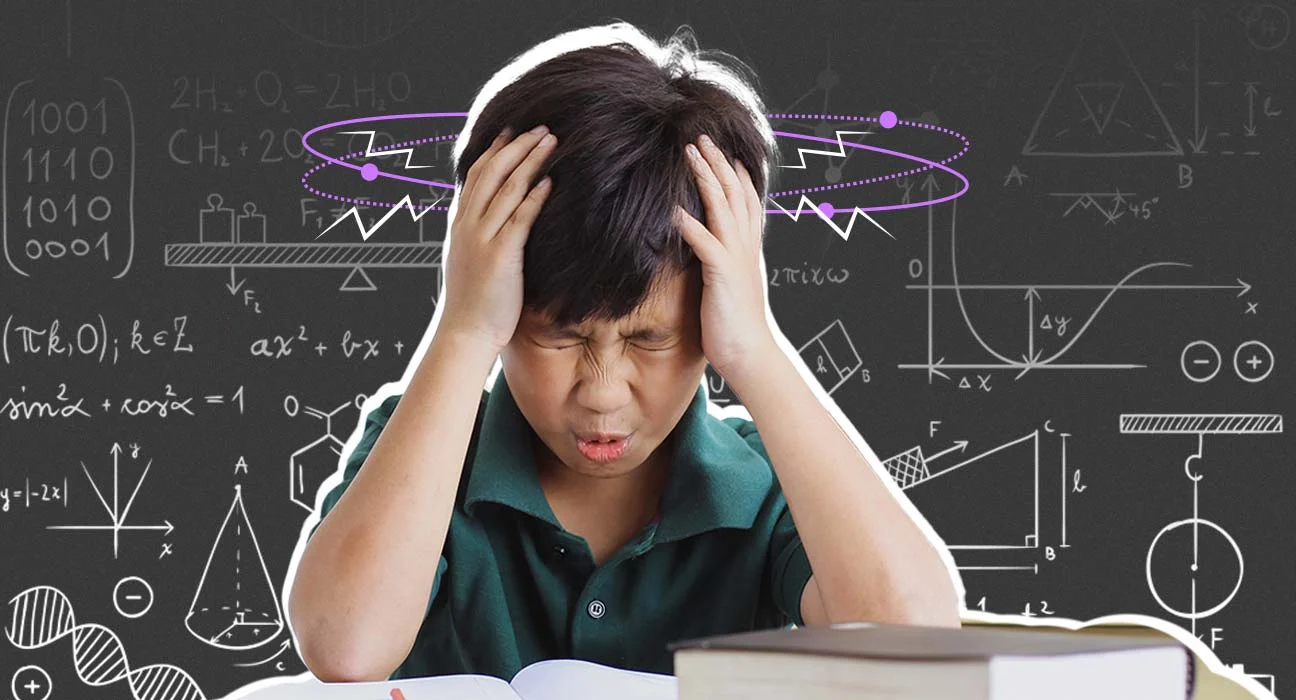
I have heard countless people complain about math, yet most can’t name a specific reason why. Many kids walk into math class with memes and jokes about math, and back away from it even before giving it a real try. In this article, I’ll break down three common negative perceptions about math and share my perspective on each one.
1. “Math is Not Cool.”
In countries like China and Korea, math ability carries serious prestige, and students who excel in math are highly praised. Here in the States, being good at math is often associated with stereotypes of being a nerd, like Sheldon from The Big Bang Theory.
It’s important for our whole society to promote a more positive perception of math. We need to show kids that they can do cool stuff with math, instead of vaguely telling them it’s important as a subject. Do you think launching rockets into space is cool? Do you think winning a basketball game using brilliant strategy is cool? Do you think your favorite video game is cool? Then math is cool, because math is fundamental to all of those.
2. “Math is Hard.”
If you’ve ever looked at a math test in China that requires high-level conceptual thinking, or the IB math in Europe curriculum where 12th graders write a 10-page research paper applying math to a real-world problem, you’d immediately realize that the U.S. high school math curriculum is not held to a high standard. Not surprisingly, U.S. students’ math literacy ranks below the OECD average. In short, American K-12 math is not hard. When I hear kids complain about math being hard, I often find that what they really mean is a lack of interest and motivation.
Adults’ views on math also negatively influence how kids perceive it. Many people believe that sports benefit youth by building resilience, confidence, and self-drive. However, when it comes to math, they often reinforce the “hard” label and allow kids to give up too quickly instead of encouraging them to push through. We should let kids face challenges in math and support them so they can experience the reward of achievement and the confidence that comes from overcoming adversity.
3. “Math is Boring.”
Kids often find math boring because they rarely use math skills outside of homework. Doing 100 push-ups with no purpose is boring. Now imagine you have an upcoming basketball game, and those 100 push-ups will increase your chances of winning. Suddenly, you’re motivated to do them. The psychology is simple: once you have a clear goal, you’re more willing to practice and put in the effort because it becomes part of the excitement. We should give kids meaningful purposes in math, rather than simply reducing homework.
Here are two ways to make math exciting for kids. The first is game-based learning. Turn the class into a game or competition, and you’ll be amazed at how eager students become to solve math problems. The second is applying math to real-world problems, for example, finding the shortest route between multiple destinations, or cutting a cake the fewest times to make enough pieces for everyone.
Eventually, math is a core subject studied for nearly 12 years in school. It’s extremely important to keep it fun and relatable to the real world. Motivating and encouraging students is the long-term solution, not reducing homework burden. More importantly, we as adults need to change our own view of math to positively influence children.